Google’s New ‘Pro Performance Indicators’: Helpful Insight or More Broad Match Pressure?
Google is rolling out new Pro Performance Indicators inside Google Ads- another layer of recommendations designed to tell advertisers where campaigns are supposedly underperforming.
The issue? A lot of these “warnings” feel less like performance insights and more like pressure to loosen control.
Examples we’re seeing:
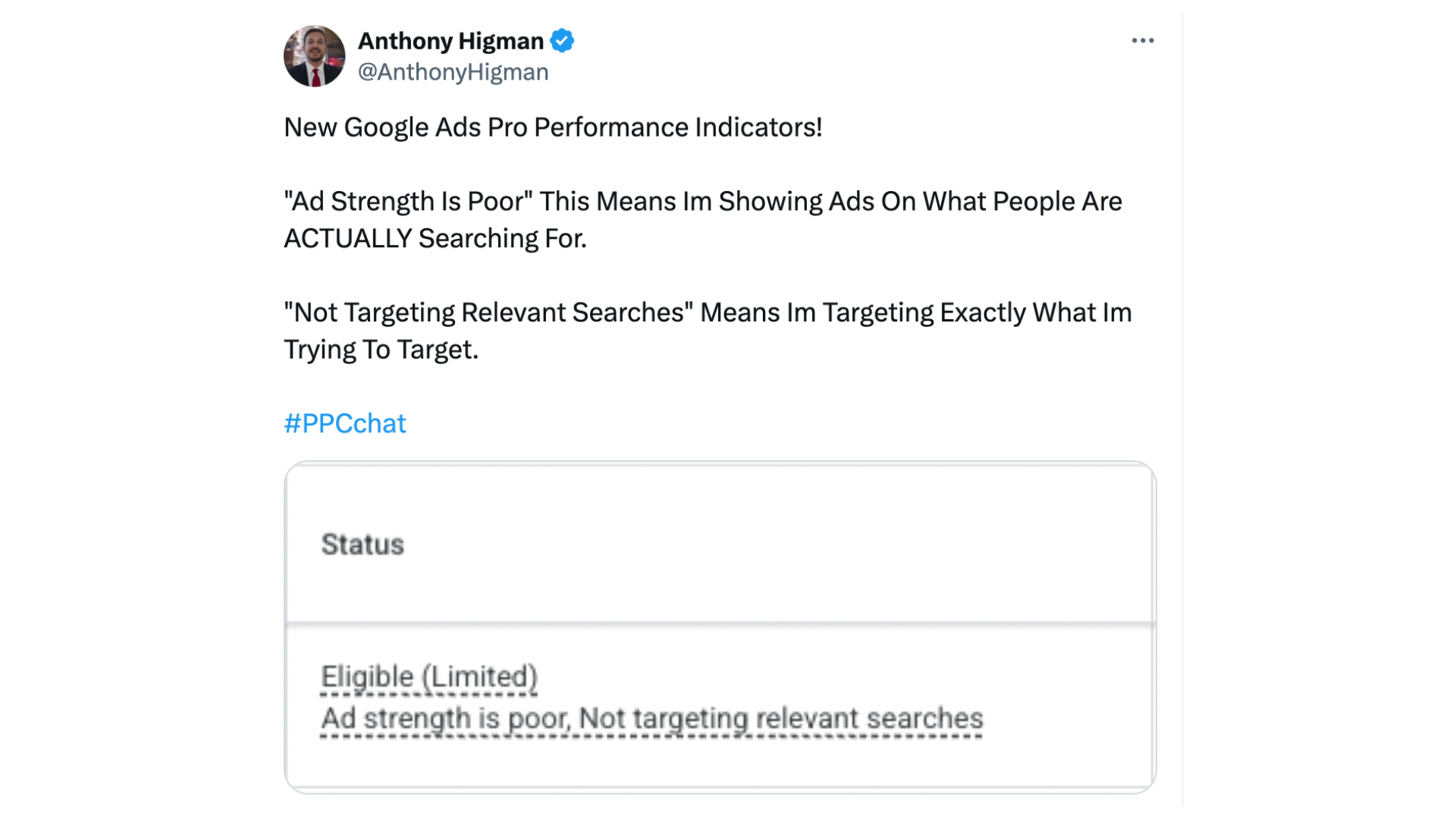
- “Ad Strength is Poor”
- “Not targeting relevant searches”
Sounds serious…Until you look closer.
In many cases, “Ad Strength is Poor” simply means the campaign is tightly aligned with the exact searches you actually want that are specific, high-intent queries instead of broad, AI-expanded traffic.
And “Not targeting relevant searches” often translates to: you’re intentionally excluding the vague, expensive, loosely related traffic Google would prefer you also pay for.
That’s not underperformance. That’s strategy.
What This Means for Law Firms
- Precision can look “bad” to Google – Tight keyword control often conflicts with Google’s preference for broad match and automation.
- Recommendations aren’t always objective – Many are built around platform adoption goals, not necessarily your best ROI.
- High-CPC industries require discipline – In legal, irrelevant clicks are expensive. “More reach” isn’t always better.
- Performance should be judged by cases, not badges – Lead quality and signed cases matter more than whether Google gives your ad a gold star.
Our take: advertisers should absolutely pay attention to performance signals, but not every platform recommendation deserves blind trust. Sometimes “poor” just means you’re not handing over full control. Google’s incentives are simple: more automation, broader targeting, more spend flexibility. Your incentive is different: profitable case acquisition.
Those are not always the same thing.
The best accounts aren’t built by chasing every recommendation- they’re built by knowing which ones to ignore.