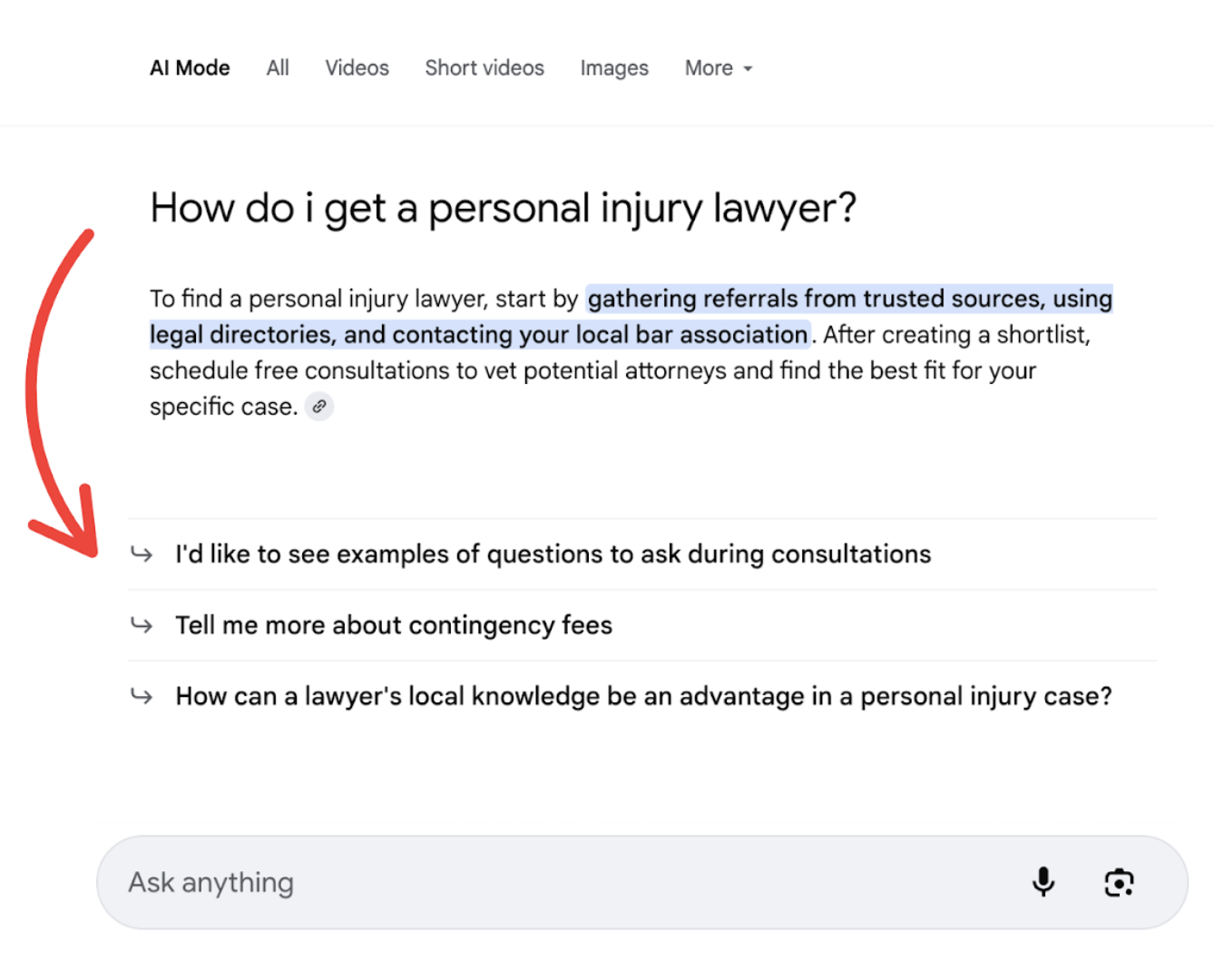
If you’ve used Google’s AI search tools lately, you’ve probably noticed something new: pre-populated follow-up questions. Instead of typing your own next query, Google is suggesting the most logical follow-ups to keep your search journey going.
From a user perspective, this feels like a big upgrade. The questions are smarter, more relevant, and often save time by surfacing what you were about to type anyway. It’s a smoother experience—and it keeps people engaged longer.
But here’s where things get interesting. If Google is shaping the follow-up questions, then Google is also shaping the path of the search itself. And our prediction? Eventually, ads will find their way into those questions. Imagine a suggested follow-up like “Best injury lawyer near me?” seamlessly placed in your search flow.
Our Take
For us, this signals two things. First, the search journey is becoming less about user-generated queries and more about platform-guided discovery. Second, advertising is almost certain to follow. Google has always monetized the points of highest intent, and these follow-up questions are quickly becoming that space.
Here’s how we’re adapting our strategies for law firms:
- Monitoring query trends. We’re keeping a close eye on what kinds of follow-ups Google is surfacing, because those will influence how potential clients find attorneys.
- Content alignment. We’re helping firms create content that matches the kinds of AI-generated questions likely to appear—so when Google guides a user down that path, your firm shows up naturally.
- Ad readiness. While Google hasn’t yet opened these AI follow-ups to ads, we’re preparing for the day they do. That means structuring campaigns to quickly plug into these formats when they arrive.
Bottom line: pre-populated AI follow-ups make search easier for users, but they also shift control of the journey to Google. For law firms, the key is staying one step ahead—so when those suggested questions turn into ad opportunities, you’re ready to meet potential clients at exactly the right moment.