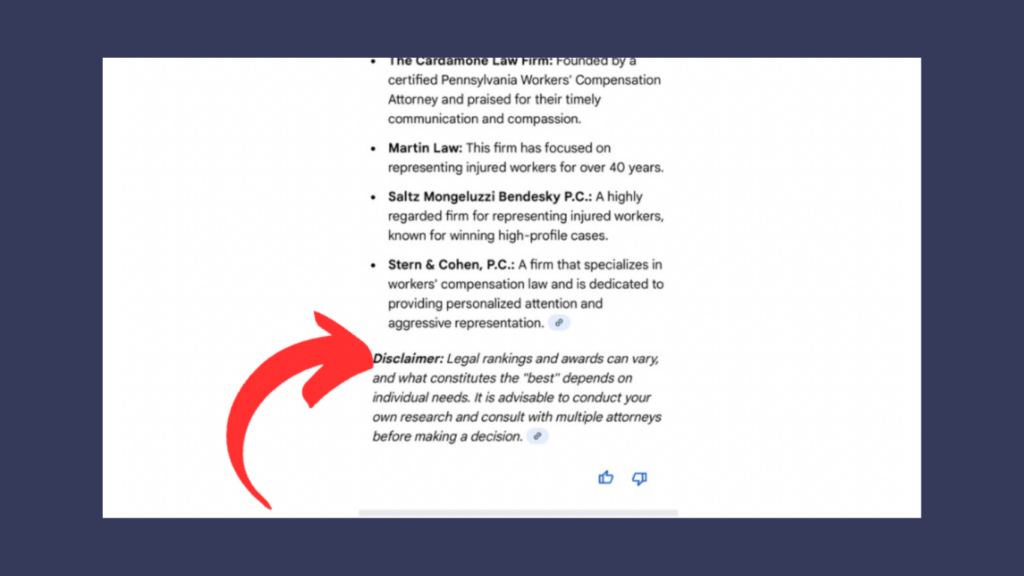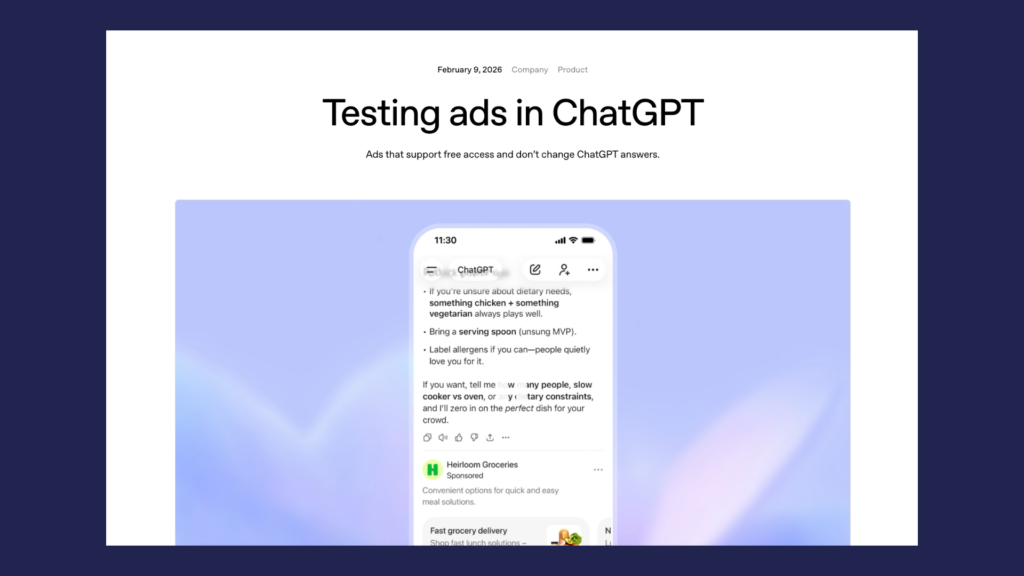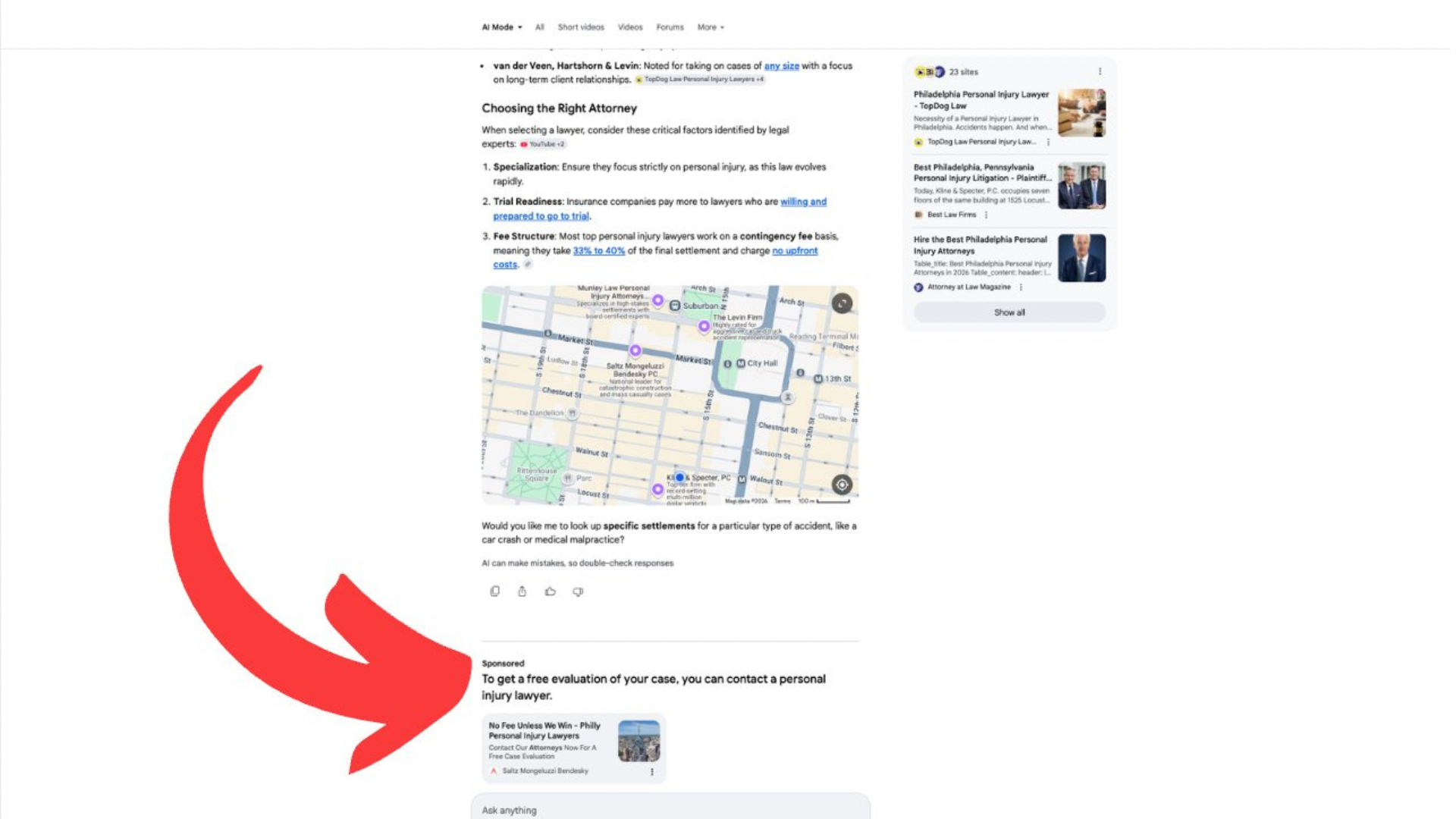
Google’s AI Mode has officially crossed a new line—actual personal injury lawyer ads are now appearing directly within AI-generated results.
This is a big deal.
We spoke with Google reps that confirmed they are actively in beta testing with sensitive ad category formats, so they’re here to stay and only going to become more prevalent as the SERP environment evolves around AI.
Until now, AI Mode has mostly lived in the research and discovery phase. Users ask questions, Google generates answers, and advertisers sit on the outside. But this changes that dynamic entirely. Google is now inserting paid placements directly into those AI responses, effectively turning conversational search into a monetized ad environment.
And based on what we’re seeing early, getting into those placements may not be as simple as running a standard, tightly controlled search campaign.
What’s Changing
These new placements don’t behave like traditional search ads.
Instead of showing alongside a list of blue links, ads are:
- Embedded within AI-generated answers
- Triggered by interpreted intent, not just exact queries
- Blended into a conversational experience rather than clearly separated
At the same time, there are strong signals that eligibility is tied to more automated campaign types, including:
- Performance Max
- Broad match-heavy campaigns
- AI-driven campaign structures (AI Max-style setups)
So rather than earning placement through precision targeting, advertisers may need to open things up significantly just to participate.
Why This Matters for Law Firms
For legal advertisers, this introduces a real tradeoff.
Law firm campaigns have always worked best when they are:
- Highly controlled
- Built around high-intent keywords
- Optimized for qualified case acquisition—not just traffic
AI Mode challenges that model.
To access these placements, firms may be pushed toward:
- Broader targeting
- Less control over where ads appear
- Reduced transparency in performance reporting
Which raises some immediate concerns:
- Budget could be spent on loosely relevant or low-intent searches
- Lead quality may become more inconsistent
- It becomes harder to isolate what’s actually driving results
At the same time, this isn’t something you can ignore. If AI Mode continues to expand—and early signs suggest it will—these placements could become a meaningful source of visibility and lead flow.
Our Take
This is a classic Google move: introduce a new high-visibility environment, then tie access to increased automation.
There’s no question AI Mode will play a major role in the future of search. But right now, the path to getting there appears to require giving up some of the control that makes legal campaigns effective in the first place.
That’s where the tension is.
- More visibility, but less precision
- More automation, but less transparency
- More reach, but potentially lower intent
For law firms, that tradeoff needs to be handled carefully. Showing up in AI Mode is valuable—but not if it comes at the expense of efficient, high-quality case acquisition.
What ADSQUIRE Is Doing
We’re not chasing placements blindly—we’re approaching this with controlled testing and a clear priority on performance.
- Monitoring AI Mode Closely
We’re tracking when and where personal injury ads appear inside AI results, and what types of queries are triggering them. - Protecting What Already Works
High-performing, high-intent search campaigns remain the foundation. We’re not sacrificing proven structures just to force entry into AI placements. - Running Controlled Tests
Where it makes sense, we’re testing:
- Broad match expansion
- Performance Max environments
- AI-driven campaign types
But always in isolated scenarios where we can measure impact clearly.
- Focusing on Lead Quality (Not Just Visibility)
We’re evaluating:
- Case quality
- Intake outcomes
- Cost per qualified lead
—not just impressions or clicks inside a new placement.
- Preparing for Better Control
We’re watching closely for updates that allow:
- Placement-level reporting
- Better segmentation
- More precise targeting within AI environments
Bottom Line
Personal injury ads entering AI Mode is a major shift. Google is clearly moving toward a fully integrated, AI-driven search experience—and monetizing it quickly.
But right now, access comes with tradeoffs:
- Broader targeting requirements
- Limited reporting visibility
- Less control over how ads are served
For law firms, the goal isn’t just to be early—it’s to be effective.
At ADSQUIRE, we’re actively testing and monitoring these placements, but staying grounded in what consistently drives results: high-intent traffic, strong messaging control, and real case acquisition.