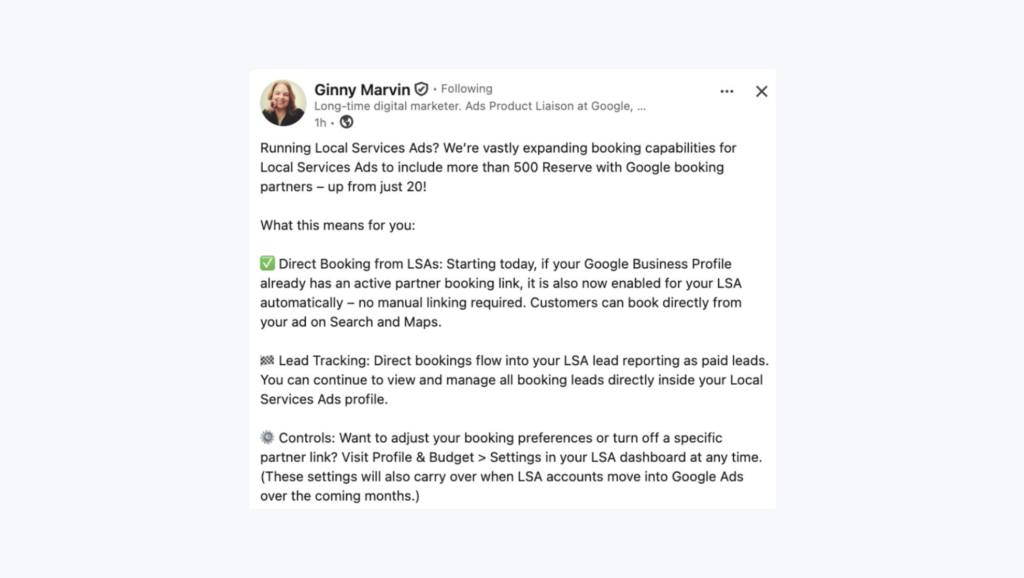
Google’s Local Services Ads (LSAs) just got another overhaul, and this one changes how both intent-based and branded searches behave. Between new labels, layout shifts, and a newfound importance of Direct Business Search, these changes to the SERPs could have larger implications for your law firm marketing strategies. Let’s break it down:
Intent Searches vs. Branded Searches: Now Playing by Their Own Respective Rules
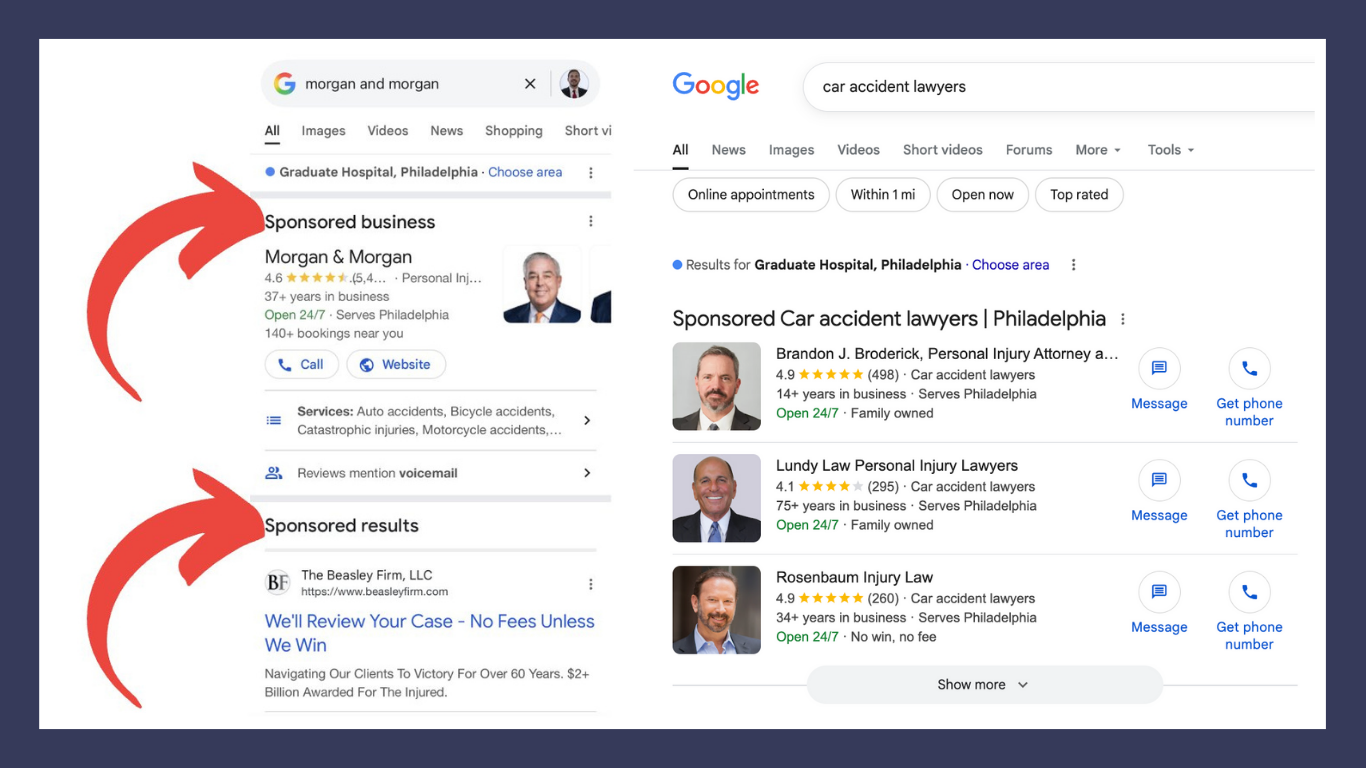
On intent-based searches (think “personal injury lawyer near me” or “criminal defense attorney Philadelphia”), LSAs now appear under a new “Sponsored [Practice Area] Lawyers” heading. The layout looks like this:
- Two listings appear at the top of the SERP,
- A “Show more” button expands to show eight listings,
- A “More [Practice Area] Lawyers” button leads to the full LSA platform.
In contrast, branded searches (like “Smith & Jones Law Firm”) now appear under “Sponsored Businesses”, usually just as a standalone LSA listing for the business: a clear signal that Google is treating name-based queries differently than general service ones.
Historically, intent-based searches have always been more expensive, because law firms could pursue high-value terms with both LSA and PPC while keeping their own branded campaigns low-cost. This setup also allowed competitor campaigns to function: you could bid on another firm’s brand keywords and reliably appear above them in paid listings, capturing some of that high-intent traffic.
Enter the LSA update. Google is increasingly prioritizing LSA over traditional PPC for branded searches. That means competitor campaigns lose a key lever, and the old approach of bidding on another firm’s brand keywords may no longer guarantee top placement.
What This Means in Practice:
- Your own brand is no longer guaranteed: Even for searches on your firm’s name, top placement now favors LSA listings with DBS enabled. Traditional PPC may not appear above them.
- Competitor PPC campaigns are weakened: You can’t bid another firm’s brand in the LSA platform, since it’s not a keyword-based format. Competitor campaigns will still work for PPC formats, but they are being essentially nerfed since LSAs will be prioritized on SERPs for branded queries.
- We might have to start paying for LSA: Even though we love our FREE LSA strategy, a small weekly budget (as low as $10) with DBS toggled on might be necessary to maximize visibility on branded queries. Without it, your only line of defense against getting buried by competitors bidding on your brand is your branded search campaign, which is being de-prioritized on the SERPs by Google. And if you don’t have a branded search campaign, you better go ahead and give ADSQUIRE a call, because your current agency is missing the mark.
- Cost shifts: While intent-based searches have historically commanded higher cost-per-lead, DBS-enabled LSAs may start trending similarly—meaning maintaining visibility for your own brand could become more expensive than previous low-cost PPC campaigns.
Our Take
This update shifts the SERP dynamics, but it doesn’t mean PPC is obsolete—far from it. Branded PPC campaigns can still capture clicks, especially with grouped “Sponsored Results” label scrolls making ads look less ad-y, potentially bringing in users who might otherwise avoid ads. The clock is ticking for competitor campaigns, and while it is important to secure your brand’s top position in both LSA and PPC for your own brand, don’t kick off your competitor PPC campaigns just yet.
Neither PPC nor LSA alone is enough. Intent-based searches remain competitive, while maintaining visibility for your own brand now benefits from a dual approach. Strategically using both formats ensures you stay visible, reach the right audience, and maintain a consistent flow of leads.
Conclusion
Google’s LSA changes are less about replacing PPC and more about redefining how visibility works across intent and branded searches. Law firms that maintain strong PPC campaigns while leveraging LSAs where it makes sense are the ones most likely to thrive. It’s a balancing act—but with the right strategy, your campaigns can thrive even as the SERP landscape shifts.