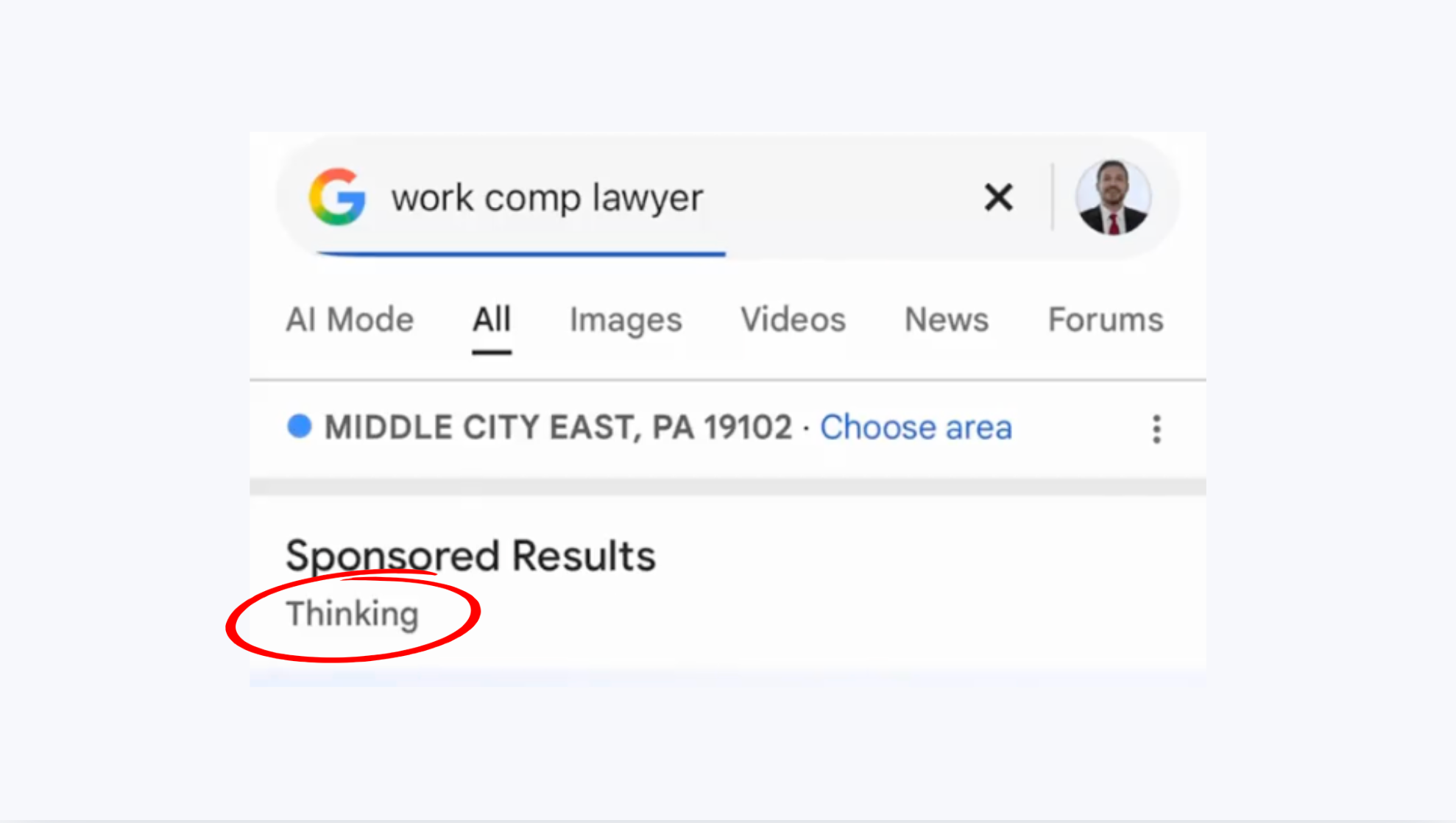
On September 16, searching “work comp lawyer” from a phone in Philadelphia, the sponsored block showed “Sponsored Results,” then “Thinking,” then a shimmering panel before any ad loaded. We posted about it that day: see the post
It is a test Google has been running for weeks. In late August, reports showed a mobile loading state reading “Evaluating sponsored results” beside Google and Gemini logos. Google described it as a loading indicator and said Gemini was not used to load the ads. By mid-September the copy had changed to “Thinking,” which is the version in the screenshot.
The mechanism is not the point. The presentation is. An ad auction is being staged as if something is deliberating over the result.
What This Means for Law Firms
The risk for a legal advertiser is implied endorsement. A person who sees “Thinking” above your ad can reasonably read it as the system weighing options and settling on your firm. It did not. It ran an auction, and you paid to be in it.
Model Rule 7.1 governs the firm’s communications, and the animation is not one of them. But a firm that pays for a frame designed to feel earned inherits the impression it creates. When a client later learns the placement was bought, the trust problem lands on the advertiser, not the interface.
Measurement gets murkier too. A loading animation changes when ads paint and how much of them people see before scrolling. Tests run across the change are contaminated, and a soft week may be the interface rather than the copy or the bid.
There is a compliance angle worth naming. Regulators and bar counsel are already asking how AI influences legal advertising. A firm that appears to be recommended by an AI, without disclosure it was not, is a question the firm will have to answer eventually.
Our Take
Calling this AI washing is fair. The feature does not make the ads smarter, more relevant, or more accountable. It borrows the visual language of a reasoned answer and applies it to a paid listing. That is a persuasion technique dressed as a capability.
We are not against AI in advertising. We use it, and we have written about where it helps. The objection here is the opposite of transparency: a label that implies judgment where there is a bid.
The practical takeaway for firms is not to fight the interface. It is to price it in. If the platform can make an ad look organic, the platform controls part of your credibility. The firms that survive that are the ones whose copy would hold up whether or not anyone “thought” about it first.
What ADSQUIRE Is Doing
We are watching the rollout and keeping client reporting honest about it. That means:
- Screenshotting sponsored-result loading states across markets as they change
- Flagging performance shifts that line up with interface tests rather than campaign edits
- Keeping ad copy defensible on its own, independent of how it is presented
- Documenting placement changes for clients who get questions from their own marketing committees
- Testing against lead quality, not click-through, when the surface changes underneath a campaign
- Raising the implied-endorsement issue with clients before a regulator or a reporter does
For law firms, the goal is not to opt out of Search. It is to make sure the only thing your ad claims is what your firm actually offers.
Conclusion
Google is testing AI-style loading language above sponsored results, and the effect is to make a paid auction look like a considered recommendation. For law firms, that is a credibility problem they did not create and cannot switch off.
The ad is still an ad. The placement is still bought. The firms that keep their claims clean and their measurement anchored to real leads will be fine when the animation cycles to the next test.
For law firms, the standard is the same as it has always been. It does not matter what the interface implies. It matters what the advertisement says.