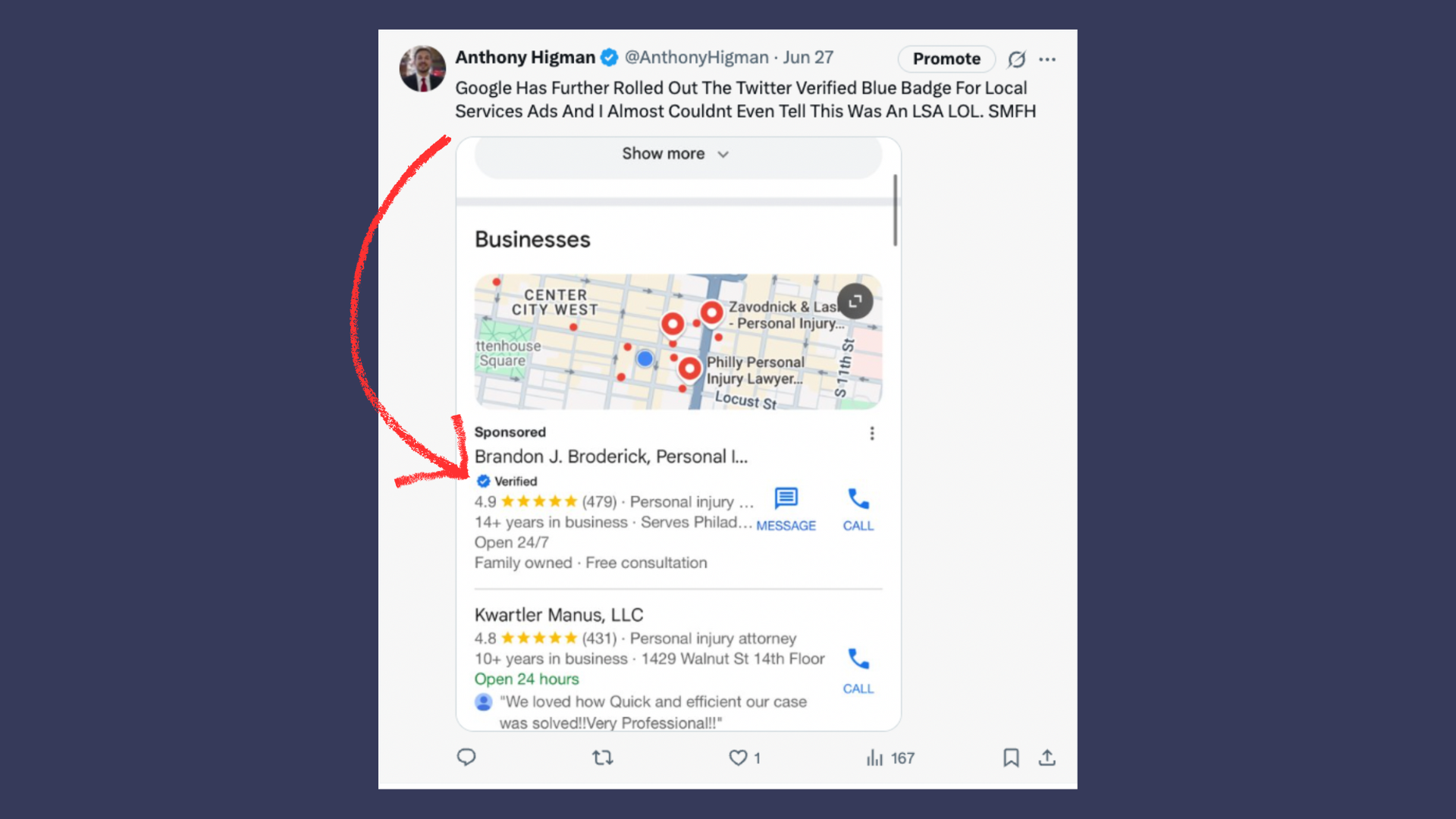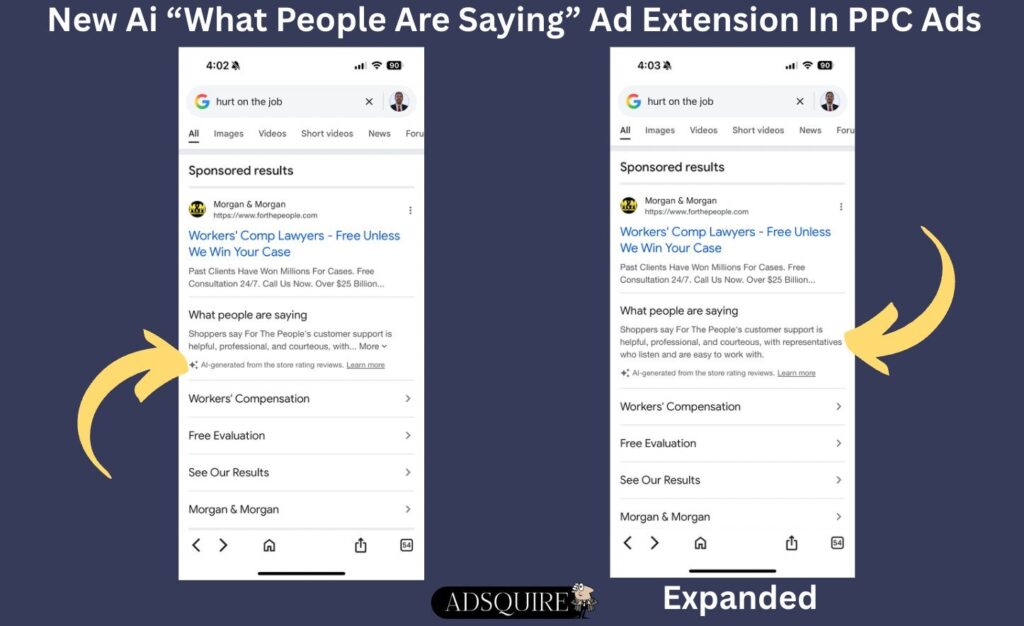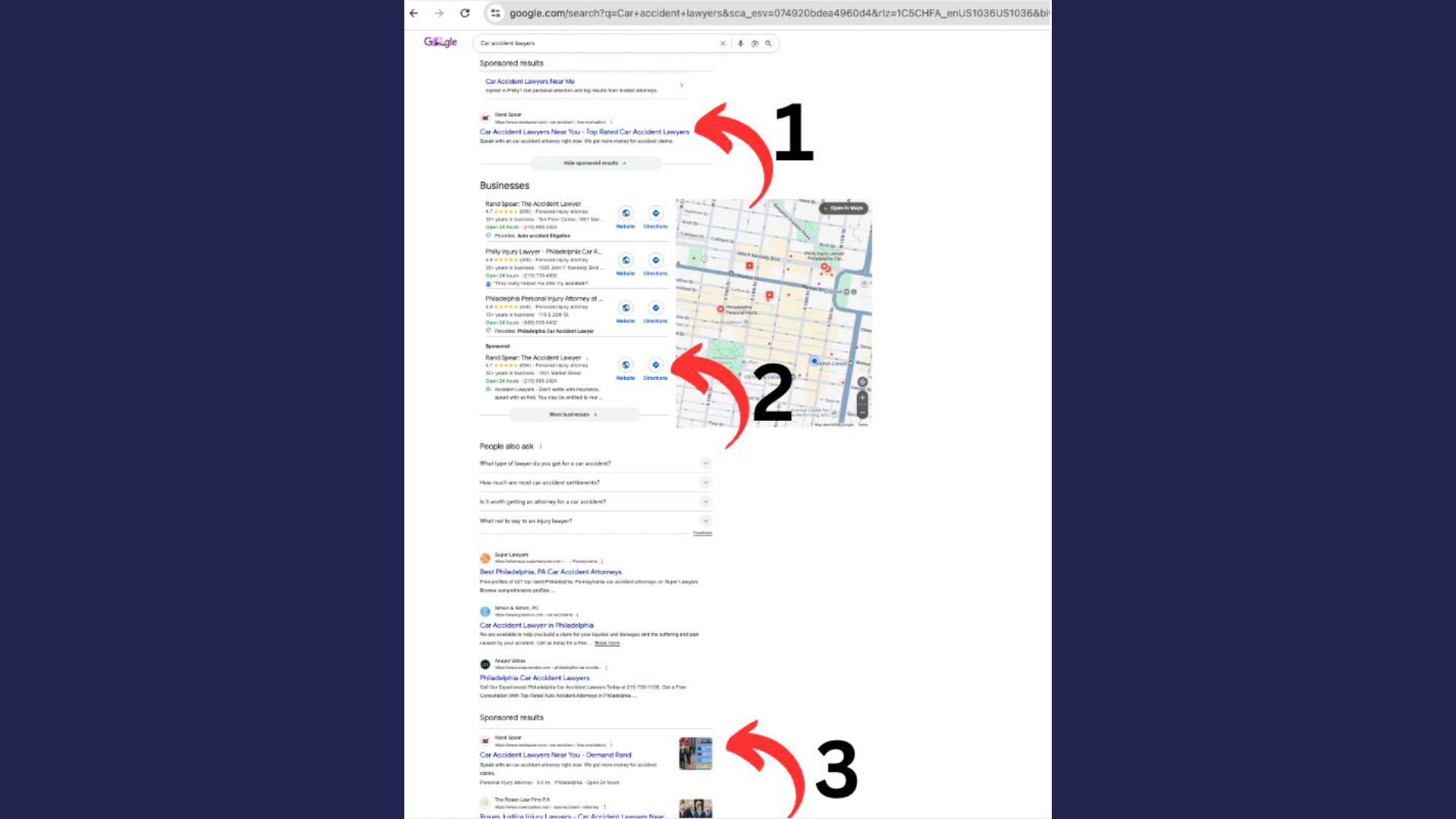
We’re seeing a noticeable increase in triple ad serve across accounts- Google allowing the same advertiser to appear multiple times on the same results page (for example, in paid search, LSAs, and other placements simultaneously).
At the same time Google is ramping up AI Overview (AIO) testing, we’re seeing more aggressive ad density and more instances of advertisers occupying multiple paid positions on the page.
That may not be a coincidence.
As AI Overviews expand and push traditional organic listings further down, Google may be compensating by increasing paid visibility opportunities- both to protect revenue and to maintain advertiser performance in a shifting layout.
Why This Could Be Happening
- AI Overviews compress organic space– As AIOs expand, fewer traditional listings are immediately visible.
- Revenue preservation– If AI answers reduce some organic clicks, expanding paid placements offsets that impact.
- Performance stabilization– Allowing triple serve may help maintain impression share for high-performing advertisers.
- SERP restructuring in real time– Google is actively recalibrating the balance between AI modules and monetized placements.
We’re also seeing some unusual layout behavior alongside this shift- more ad stacking, tighter clustering of paid placements, and heavier monetization above the fold.
Our Take: When Google tests something as disruptive as AI Overviews, it doesn’t leave monetization to chance. Increasing triple ad serve appears to be part of a broader SERP recalibration strategy.
The key for law firms is to understand that the search results page is becoming more condensed, more AI-driven, and more paid-heavy.
Search ads aren’t just about bidding strategy anymore. It’s about understanding how AI modules, ad density, and placement stacking interact and positioning your campaigns accordingly.
The firms that recognize these structural shifts early will protect their visibility and maintain higher quality campaigns over competitors.