Google Ads Policy Update: Don’t Alter Verification Documents
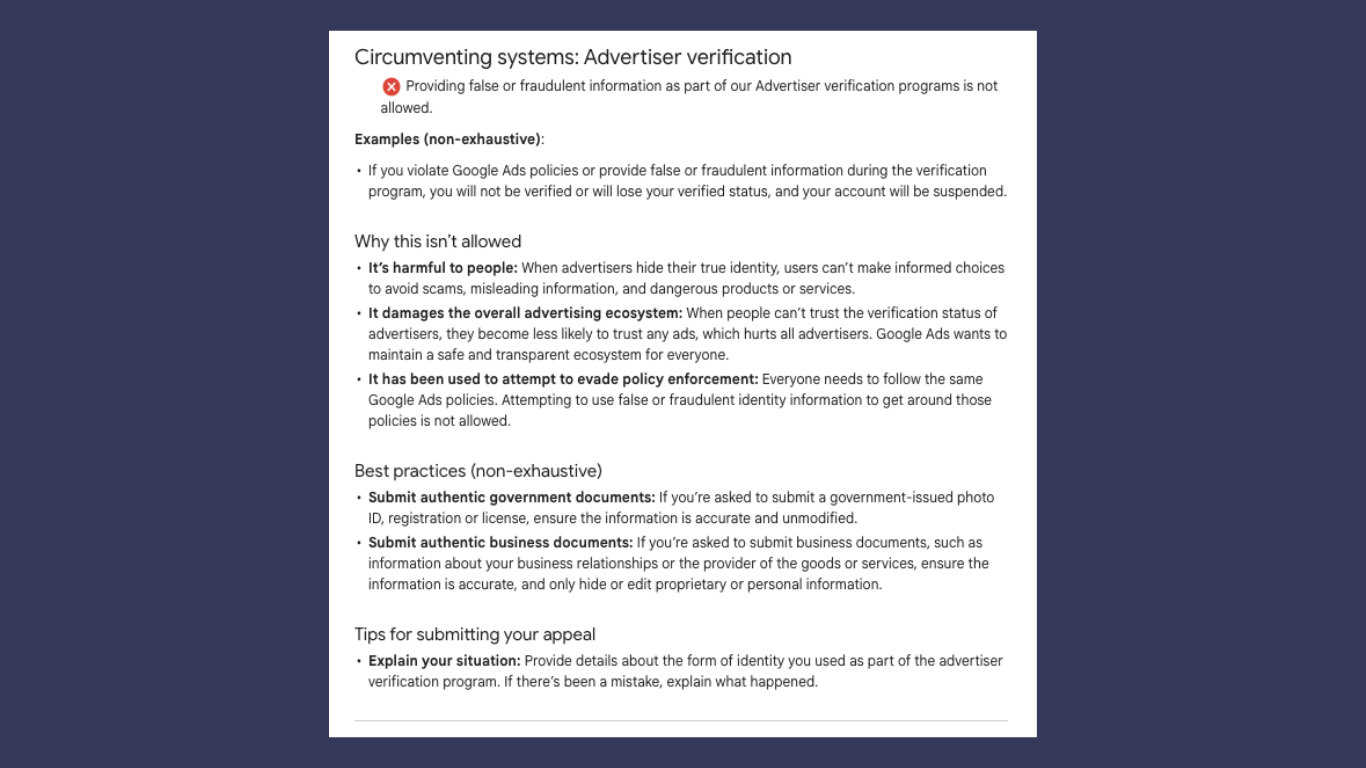
In November 2025, Google added clarification to its Circumventing Systems policy, emphasizing that submitting false or modified information during Advertiser Verification can result in account suspension. While this isn’t a new enforcement policy, the update makes it clear that Google is scrutinizing advertiser verification submissions more closely than ever. What is funny is that it corresponds with the release of Google Nana Banana which lets you quite easily doctor up and change documents. We have seen social posts doing the rounds of people creating very real looking drivers licenses and passports.
What Changed
Google added an example to the Circumventing Systems policy illustrating that altering dates, information, or documents during verification is a violation. The policy now explicitly reinforces that:
- Providing false or fraudulent information as part of Advertiser Verification is prohibited
- Doing so can result in losing verified status and full account suspension
No enforcement rules have changed — it’s a clarification, not a new restriction — but advertisers should consider this a warning to ensure all verification materials are accurate and authentic.
Why This Matters
The reasons behind the policy are straightforward:
- Protecting users: Accurate verification ensures users can trust the identity and legitimacy of advertisers, reducing exposure to scams, misleading content, or unsafe services.
- Maintaining ecosystem trust: Misrepresenting verification status undermines confidence in Google Ads overall, which impacts all advertisers.
- Preventing policy evasion: Google has consistently emphasized that falsifying verification information to bypass rules is unacceptable. This clarification underscores that the system is under closer scrutiny.
Best Practices for Verification
To stay compliant and avoid risk:
- Submit authentic government documents: Provide real, unmodified photo IDs or other required government-issued documentation.
- Submit accurate business documents: Include business registration information or relevant provider details. You may hide sensitive or proprietary data, but do not alter dates, names, or official information.
- Be transparent in appeals: If a verification attempt fails, explain your situation clearly and provide accurate supporting documentation.
Our Take
This update doesn’t introduce new rules — it simply clarifies Google’s position and signals heightened attention on verification submissions. With the rollout of Google’s new AI image generation tool Nano Banana Pro, it’s become easier than ever to doctor official documents, drivers’ licenses, and any other docs Google requires for verification. Do NOT doctor expired or irrelevant documents to get through Google Ads or LSA verification! Law firms and other advertisers should review their official documents, renew licenses, and take proper steps to keep documents up to date to to ensure everything is accurate and compliant. Even minor modifications to dates, addresses, or documents could trigger account suspension, which can be disruptive and costly.
What ADSQUIRE Is Doing
- Reviewing client verification submissions for accuracy and compliance
- Proactively seeking out updated documents from our clients before they expire.
- Training internal teams and client staff on best practices to avoid risky workarounds.
Bottom Line: Don’t experiment with your verification materials. Accuracy, authenticity, and transparency are key — especially as Google applies more scrutiny to Advertiser Verification. Staying compliant now prevents unnecessary account risk later.