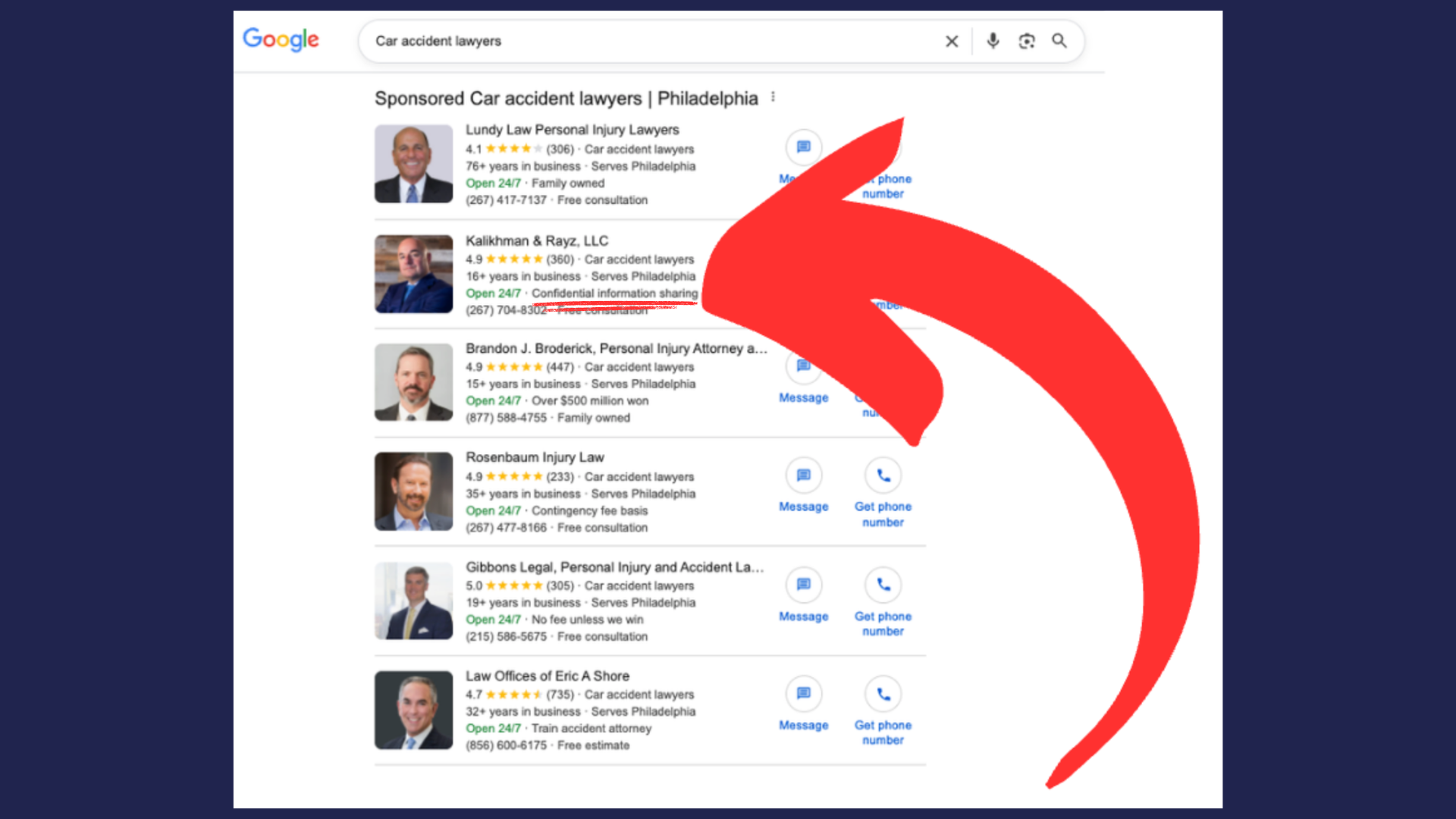
We recently spotted an issue inside Local Services Ads (LSAs) involving dynamic callouts generated within the ad format.
Here’s the concern: LSAs clearly disclose in their terms that calls may be recorded and are not confidential or attorney-client privileged. That language is explicit.
At the same time, we observed a dynamic callout being surfaced that implied a level of confidentiality that directly contradicts those terms.
That creates a serious messaging conflict.
If calls are recorded and explicitly not protected under attorney-client privilege, then suggesting otherwise- especially in a dynamically generated ad element- introduces risk. For legal advertisers, precision in language isn’t optional. It’s ethical, regulatory, and potentially liability-driven.
Why This Matters for Law Firms
- Legal advertising requires strict accuracy – Any implication of confidentiality must align with actual intake processes and platform terms.
- AI-generated messaging isn’t immune from error – Dynamic systems can misinterpret positioning and create conflicting statements.
- Platform liability questions arise – If an ad format both records calls and implies confidentiality, clarity becomes critical.
- Reputation risk is real – Trust is foundational in legal marketing. Messaging inconsistencies undermine that trust.
Our take: automation is expanding across every Google ad product, including LSAs. But when AI-driven messaging intersects with legal disclaimers and recorded communications, the margin for error is extremely small.
Platforms can’t simultaneously disclaim confidentiality while dynamically implying it. It has to be one or the other. Accuracy matters, especially in a profession built on fiduciary responsibility and ethical standards.
As ad formats become more automated, law firms must monitor not just performance but messaging integrity. We continue to search for and call out Google’s ethical blunders because in legal marketing, compliance isn’t merely a suggestion.
Update on the issue: As of February 10th, Google Appears To Recently Have Disabled Dynamic Calls Outs From Businesses Websites. Was It A Result Of Our Findings? Who Knows! But Probably!