YouTube Shoppable Ads Update: Side Panel Can’t Be Closed Anymore
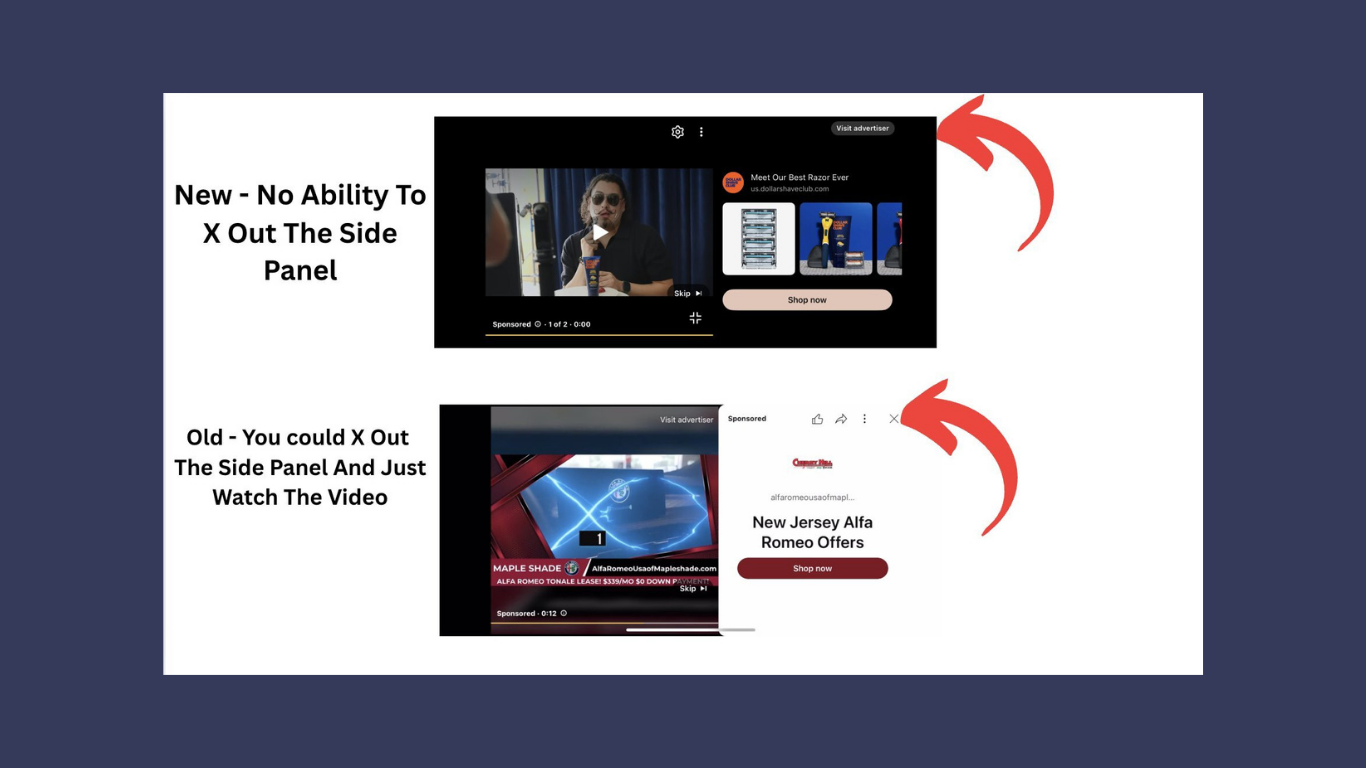
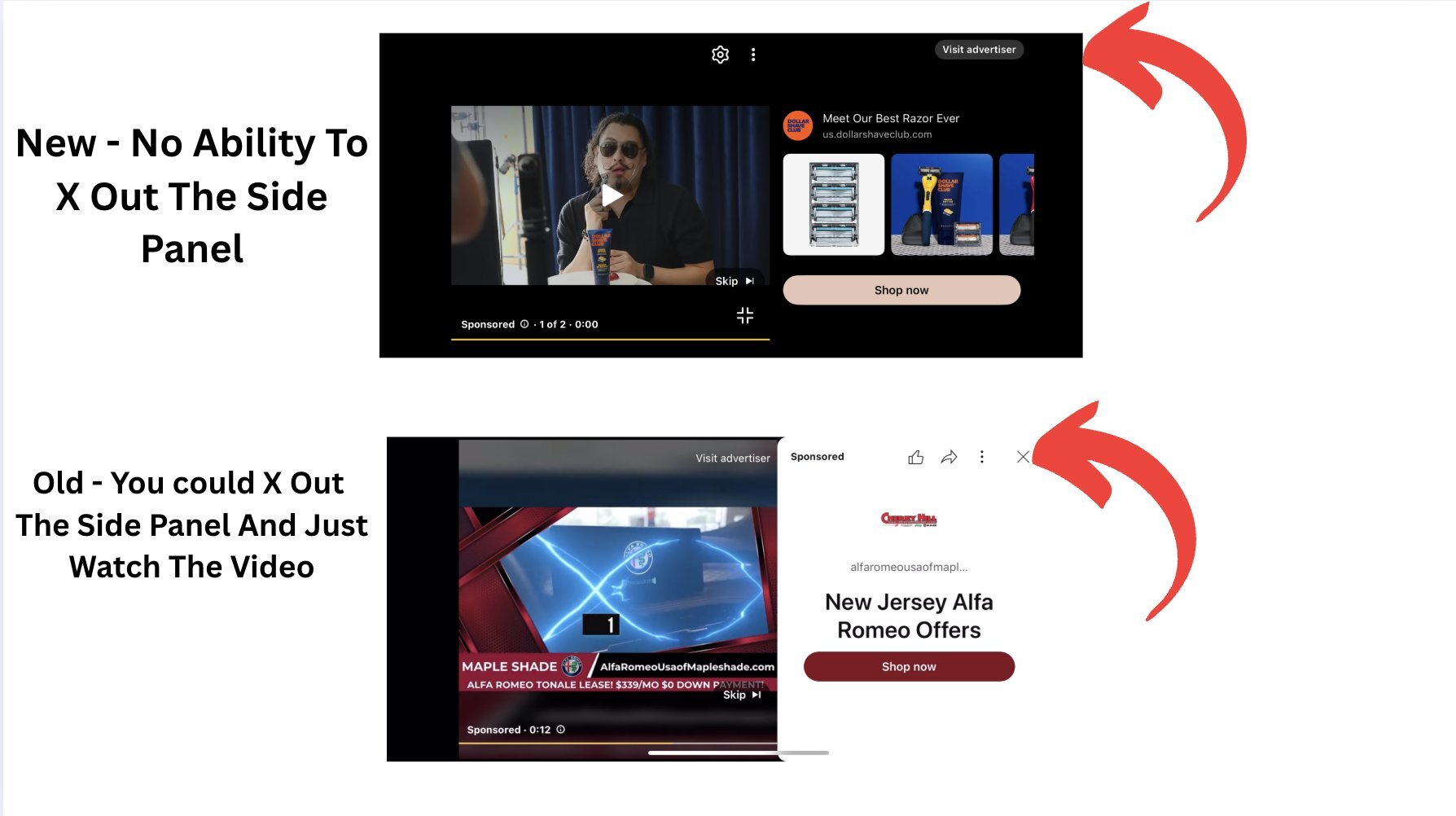
YouTube has quietly begun rolling out a change to its Shoppable ad experience on mobile devices that may not make headlines in every industry—but it’s worth understanding, especially for advertisers monitoring Google’s experimentation with video formats. The update removes the “X” that previously allowed viewers to close Shoppable side panels and return to a full-screen video ad. Now, the side panel remains fixed on half the screen for the duration of the ad, while the video plays in a reduced frame alongside the product cards and CTAs.
What’s Actually Changing
- The dismiss (“X”) button on Shoppable side panels is gone.
- Video and product cards share the screen throughout the ad.
- All CTAs and product modules remain fully visible for the entire ad runtime.
Why This Matters
On the surface, this might seem like a minor tweak—but it’s part of a broader trend: YouTube experimenting with ad formats that prioritize commerce engagement over traditional user experience. While this update is primarily relevant for retail and DTC brands running Shoppable campaigns, it signals how far YouTube is willing to push the viewer experience to drive measurable interactions.
- Increased visibility for products: By making product cards persistent, YouTube ensures that every viewer is exposed to Shoppable content, potentially increasing clicks, conversions, or other engagement metrics.
- Altered UX: The tradeoff is a smaller video canvas and a potentially more constrained viewing experience. This could impact storytelling, creative effectiveness, and overall viewer satisfaction.
- Data-driven experimentation: With the panel always visible, advertisers gain clearer signals on how viewers interact with products, CTAs, and ancillary assets—a metric-driven approach that may justify the UX compromise.
Implications for Advertisers
For law firms, this update may not immediately affect campaign performance, since Shoppable ads aren’t part of typical legal marketing. However, the broader significance lies in YouTube’s approach to experimentation:
- Google is willing to trade off traditional video UX to test new formats that could drive measurable results.
- Even if your firm isn’t running commerce-focused ads, this signals that other video ad formats—especially those with new overlays, side panels, or interactive features—could evolve in ways that affect visibility and engagement.
- Staying aware of these shifts allows digital teams to anticipate changes in video ad strategy, measurement, and creative requirements before they become industry-wide.
Potential Benefits for Advertisers
- Consistent product exposure across the ad duration
- More reliable engagement data for Shoppable modules
- Opportunity to test split-screen creative and CTAs in a controlled environment
Potential Drawbacks
- Reduced video real estate may dilute visual storytelling
- User experience may feel constrained or less enjoyable
- Creative that relies on full-screen impact may lose effectiveness
- Engagement with products may appear artificially high due to forced visibility
Our Take
While this change is most relevant for retail and e-commerce campaigns, it underscores a key point for all advertisers: Google is actively experimenting with video ad formats, and not every change prioritizes user experience. Whether it’s Shoppable panels, split-screen overlays, or AI-driven video features, advertisers need to stay aware of these evolutions—even in industries like legal services where the immediate impact may be indirect.
For firms that run YouTube or video campaigns, the takeaway is to monitor creative rendering across devices, measure performance carefully, and be ready to adapt as Google continues to push new formats. Even changes that feel irrelevant today could influence the evolution of ad placement, engagement metrics, or user expectations tomorrow.