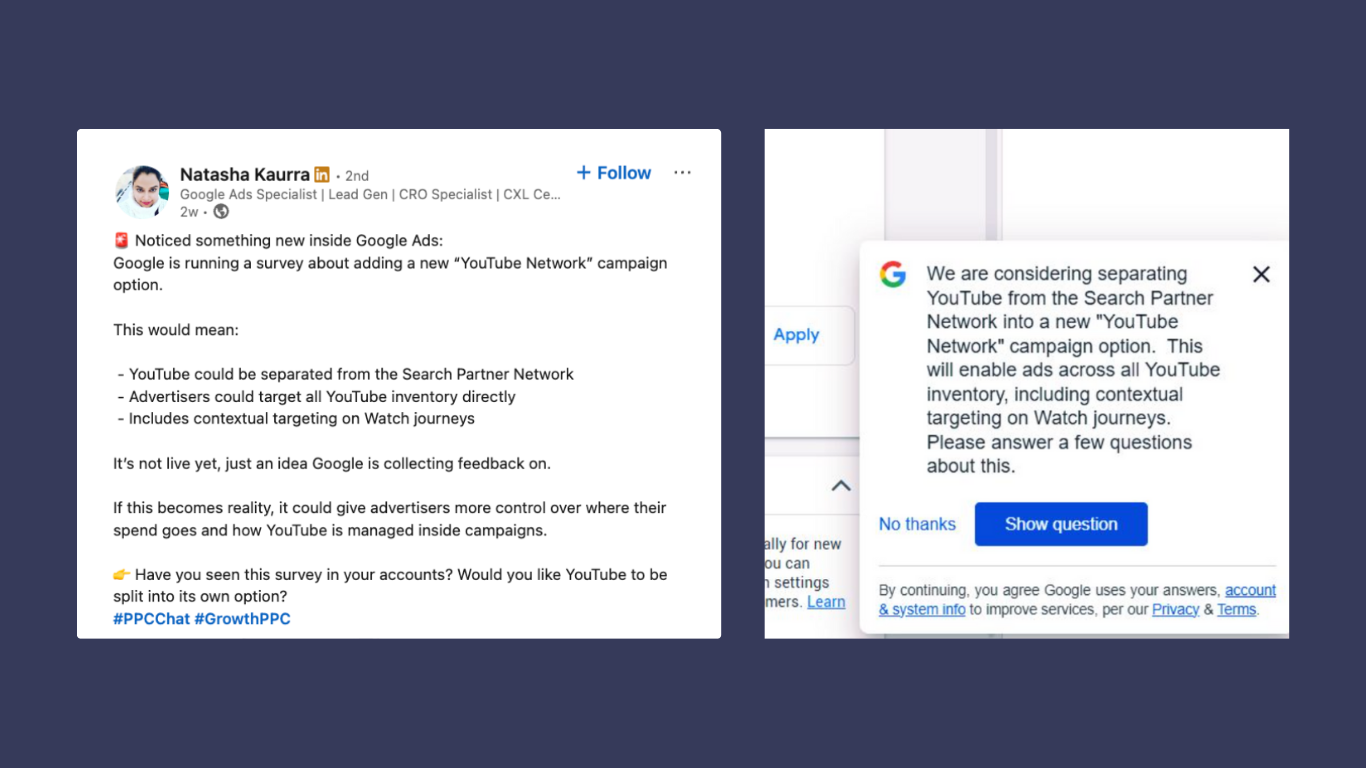
Google is floating a new idea: a standalone “YouTube Network” campaign option. This comes from a survey recently shared by Natasha Kaurra, and while it’s not live yet, it could mark a big shift in how advertisers target YouTube.
What’s Being Proposed
If this concept becomes reality, advertisers could see:
- YouTube separated from the Search Partner Network (SPN)
- Direct targeting across all YouTube inventory — without being bundled into SPN
- Contextual targeting within Watch journeys (essentially following viewers as they engage with content)
It’s still in survey stage, but the fact Google is even testing this direction is worth paying attention to.
Why This Feels Familiar
This move feels less like a surprise and more like the culmination of a long-term plan. Here’s the timeline:
- 3 years ago: Google started trimming down SPN, de-prioritizing small bloggers and focusing on larger publications.
- Then: Changes to AdSense rules pushed smaller sites out of the monetization pool.
- Last month: Google finally gave advertisers full SPN placement visibility (after decades of asking).
- Now: We’re seeing early signals that YouTube might spin off into its own targeting bucket.
It looks like the traffic that used to live across a wide array of publisher sites is being funneled back toward Google-owned properties — and YouTube is the crown jewel.
What It Means for Legal Advertising
For law firms, this could actually be a positive. The SPN has always been murky, with ads popping up on questionable placements. A dedicated YouTube Network would:
- Give you more control over spend and placements
- Let you run video-first strategies without wasting budget on the wider SPN
- Improve transparency — something legal advertisers need for compliance
Our Take
We’ve been wanting this for years: the ability to target just YouTube, without getting lumped into the unpredictable Search Partner Network.
If it rolls out, costs will almost certainly rise (Google likes to tax transparency), but the tradeoff could be worth it for firms that want video-heavy strategies and cleaner placement reporting.
We’ll be keeping a close eye on this one — because if YouTube does break free, it could reshape how legal advertisers run multi-channel campaigns.